Why Is My PMS Getting Worse? What's Normal and What's Not
August 14, 2026
You used to know exactly what to expect. A day or two of feeling a bit flat, maybe some cravings, then your period arrived and life carried on. Now it feels different. The irritability starts earlier. The bloating lingers longer. The week before your period has quietly expanded into something that colours half your month.
If that sounds familiar, you're not imagining it, and you're definitely not alone. "Why is my PMS getting worse?" is one of the most common questions women in their late 30s and 40s search for online, usually at 11pm while lying awake wondering what changed.
Here's the honest answer: it's complicated, but it's also explainable. And once you understand what's actually going on, it gets much easier to work out what's normal, what's not, and what genuinely helps.
What PMS actually is (a quick refresher)
Premenstrual syndrome describes the cluster of physical and emotional symptoms that show up in the luteal phase, the week or two between ovulation and your period. Mood swings, irritability, breast tenderness, bloating, fatigue, headaches, sleep changes, cravings. Most women who menstruate experience at least some of these, some of the time.
The driver is the natural rise and fall of oestrogen and progesterone after ovulation. Those hormones don't just manage your cycle; they interact with brain chemicals like serotonin that regulate mood, sleep and appetite. Some women's brains are simply more sensitive to these fluctuations than others, which is why your best friend barely registers hers while you're cancelling plans, snapping at people you love, and crying at an ad you've seen fifty times.
Why PMS can feel worse in your late 30s and 40s
Let's clear up something confusing straight away: your symptoms genuinely are worse. You're not misremembering your 20s, and you haven't become less resilient. But here's the twist most articles gloss over: it's usually not PMS itself that changes with age. It's the hormonal ground underneath it. From your late 30s onward, something else often starts happening that looks and feels exactly like worse PMS, and gets mistaken for it constantly.
That something is perimenopause, the transition phase before menopause that can begin as early as your late 30s. During perimenopause, oestrogen and progesterone stop following their old predictable script. Instead of a smooth rise and fall, they fluctuate erratically, and those bigger, messier swings can amplify all the classic premenstrual symptoms: sharper mood dips, heavier bloating, more disrupted sleep, breast tenderness that arrives earlier and stays longer.
So for many women, "my PMS is getting worse" is actually "my PMS and early perimenopause have started overlapping." It's a genuinely useful distinction, because it changes what helps. We've written more about this transition in our guide to why women sleep worse in perimenopause.
Perimenopause isn't the only factor, though. A few other things tend to stack up in this decade of life:
- Cumulative load. Careers, kids, ageing parents, mortgages. Chronic stress raises cortisol, and cortisol interacts directly with your reproductive hormones. A stressed luteal phase is almost always a louder one.
- Sleep debt. Poor sleep worsens premenstrual mood symptoms, and premenstrual hormone shifts worsen sleep. It's a loop, and by your 40s it's often well established. (Our guide to why you can't fall asleep covers this in detail.)
- Alcohol hits differently. Many women notice their tolerance drops through their 40s, and alcohol is a known amplifier of premenstrual symptoms, particularly mood and sleep.
- Nutrient gaps. Magnesium, B vitamins and iron all play roles in mood regulation and energy, and intakes commonly fall short in busy NZ and Australian households where you're feeding everyone but yourself last.

What's normal (and what's not)
Normal PMS follows a pattern, even when it's more intense than it used to be. It arrives after ovulation, builds in the days before your period, and lifts within a few days of bleeding starting. It's uncomfortable, sometimes properly unpleasant, but it doesn't dismantle your life.
Some things sit outside that pattern and deserve proper attention:
- Symptoms that don't lift when your period arrives, or low mood that persists across your whole cycle. That's not PMS, and it's worth talking to your GP about.
- Severe mood symptoms such as rage, despair or anxiety that seriously disrupt your relationships or work each month. This can be premenstrual dysphoric disorder (PMDD), a recognised condition affecting a small percentage of women. It's real, it's treatable, and it's not something to white-knuckle through.
- Very heavy or flooding periods, cycles shorter than 21 days, or bleeding between periods. Common in perimenopause, but always worth checking rather than assuming.
- A sudden dramatic change in your cycle or symptoms, rather than a gradual shift.
The rule of thumb: if it's predictable and manageable, it's likely normal. If it's escalating, unpredictable or eroding your quality of life, get it looked at.
What actually helps
The good news is that the things with the best evidence behind them are refreshingly unglamorous, and most of them compound.
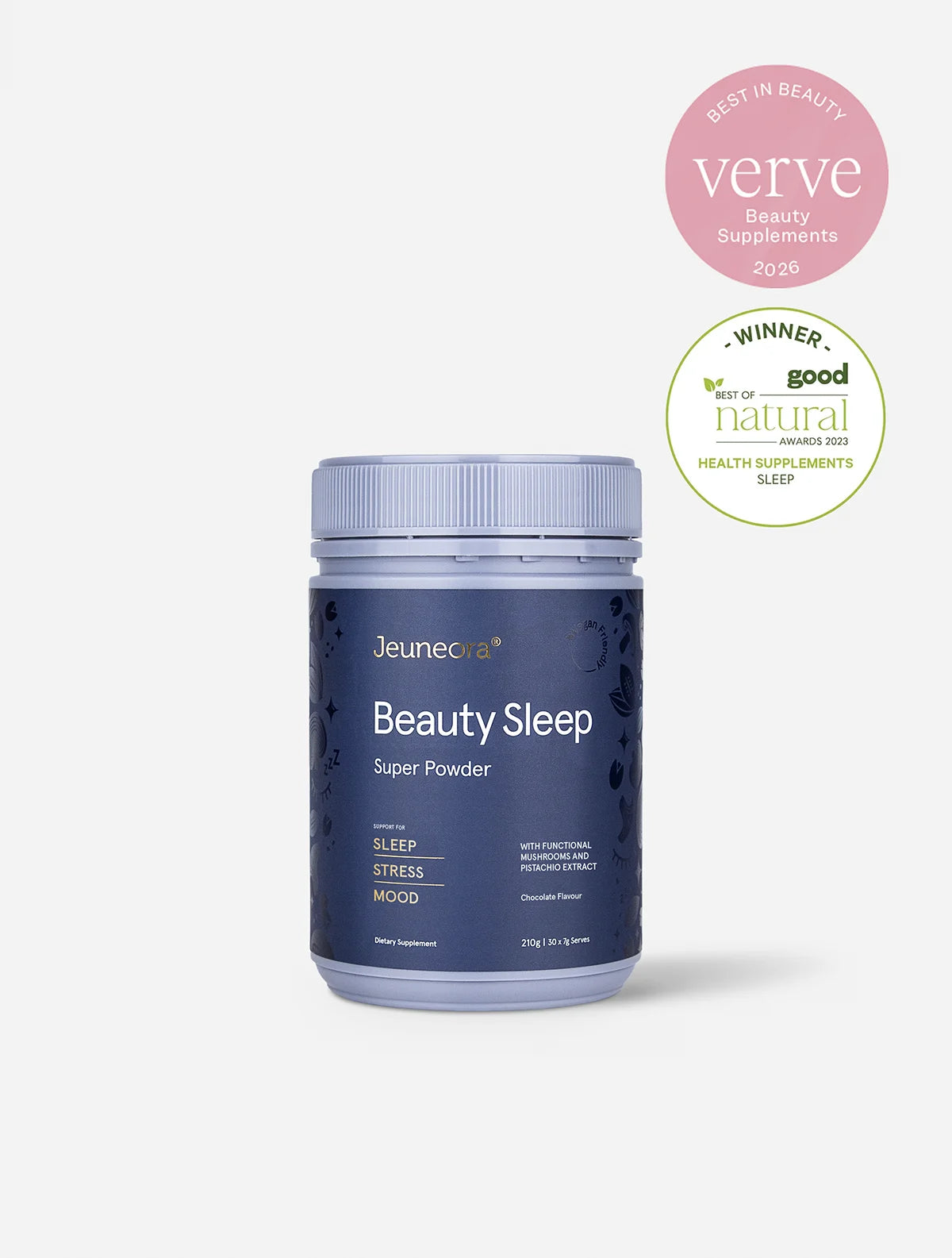
The fundamentals first. Regular movement (especially in your luteal phase, even when you least feel like it), consistent sleep and wake times, less alcohol in the week before your period, and steady meals rather than long gaps. None of it is exciting. All of it moves the needle. If winding down at night is where it all falls apart, swapping the evening wine for something like our hot chocolate flavoured Beauty Sleep is one of those small habit changes that quietly pays for itself.
Magnesium is the standout mineral. It's involved in muscle relaxation, nervous system regulation and sleep quality, and it's one of the most consistently researched nutrients for premenstrual support. Magnesium bisglycinate is the form to look for; it's gentle on the stomach and well absorbed.
Chaste berry has the strongest herbal track record. Also known as vitex, it's been the subject of multiple clinical trials for premenstrual symptoms, with research suggesting benefits for breast tenderness, irritability and mood. It works gradually, over two to three cycles, so consistency matters more than intensity.
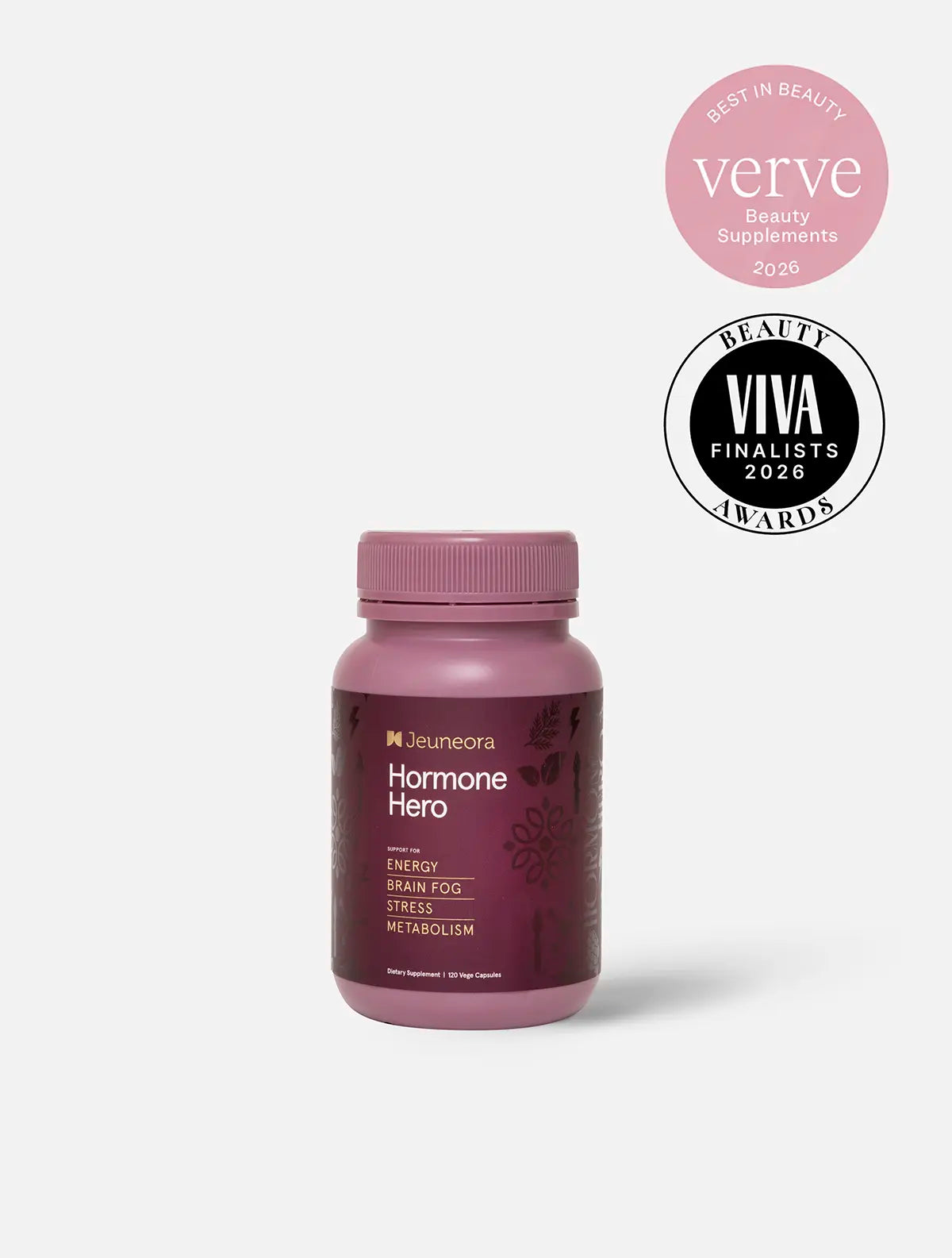
This is exactly the territory Hormone Hero was formulated for. It's our daily supplement designed for women navigating hormonal change, whether that's PMS that's ramped up over the last few years, early perimenopause, or the messy overlap of both. Each dose delivers chaste berry alongside 320mg of magnesium bisglycinate, Fermodiola® fermented rhodiola for stress support, Bluenesse® lemon balm, shatavari and Eriomin® lemon bioflavonoids, all at researched levels. If you've been searching for PMS supplements in NZ and finding either single-ingredient bottles or vague "hormone balance" blends, this is the considered middle ground: one formula, taken daily, built around the ingredients with actual evidence.
And because hormonal wellbeing rarely exists in isolation, it's worth looking at the foundations too. If disrupted sleep is your loudest symptom, our guide to perimenopause and sleep is the place to start.
What about cycle syncing?
If you've spent any time on social media lately, you'll have seen cycle syncing: the idea of changing your food, workouts and supplements to match each phase of your cycle. It's having a genuine moment, and parts of it are sensible. Paying attention to your cycle, tracking symptoms, being kinder to yourself in your luteal phase: all good.
But we'd be doing you a disservice if we didn't say this plainly: there's currently no strong clinical evidence that rotating different supplements through different cycle phases works better than simply taking the well-researched ones consistently. Multi-bottle phase kits make for great content and complicated bathroom shelves. The research, such as it is, favours boring consistency: the same evidence-backed nutrients, daily, for at least a couple of cycles. Track your symptoms by all means. Just don't feel you need four different powders to do it. (We took the same honest look at sleepmaxxing recently, and the conclusion rhymes.)

When to see your GP
You don't have to just put up with it, and you're not wasting anyone's time by asking. Book an appointment with your GP if:
- Your symptoms are severely affecting your work, relationships or day-to-day life
- Low mood, anxiety or rage feel unmanageable, or you suspect PMDD
- Your periods have become very heavy, prolonged or unpredictable
- Symptoms persist beyond your period rather than lifting
- You're simply not sure whether what you're experiencing is PMS, perimenopause or something else
Here in New Zealand, your GP can talk you through the full range of options, from lifestyle and nutritional support through to prescription treatments where they're appropriate. That can include hormonal contraception to smooth out cycle fluctuations, menopausal hormone therapy (what most of us still call HRT) if perimenopause is in the picture, or antidepressants where PMDD is suspected. It helps to know these options exist before you walk in, so you can ask about them directly rather than hoping they come up.
The bottom line
If your PMS feels like it's getting worse, believe yourself. The most likely explanation isn't that you've become less resilient; it's that your hormones have entered a new, less predictable chapter, often with early perimenopause in the mix, and your old coping strategies were built for the previous one.
The playbook that helps is steady rather than dramatic: protect your sleep, move regularly, ease off alcohol in your luteal phase, and give the well-researched ingredients like magnesium and chaste berry a proper two to three cycle run. And if anything feels beyond normal, your GP is the right next step, not a longer scroll through social media.
You know your body. Trust what it's telling you, and give it the support it's actually asking for.