Is Sleepmaxxing Worth It? An Honest Look at the Viral Sleep Trend
July 20, 2026
You've seen the videos. Someone in a softly lit bedroom taping their mouth shut, strapping on a sleep tracker, sipping a magnesium mocktail from a coupe glass, then settling under a weighted blanket in front of a red light bulb. Welcome to sleepmaxxing, the internet's biggest sleep trend, with billions of views and an entire industry of gadgets riding along behind it.
Here's the thing. Some of it genuinely works. Some of it is harmless but pointless. And some of it can actually make your sleep worse. If you're tired enough to be tempted by all of it, this is the honest guide to which is which.
What is sleepmaxxing, exactly?
Sleepmaxxing is an umbrella term for stacking habits, products and routines to get the best possible sleep. Think of it as sleep hygiene turned up to eleven: supplements, trackers, mouth tape, cooling mattress toppers, blackout everything, kiwifruit before bed, elaborate wind-down rituals timed to the minute.
The genuinely good part of the trend is that it has made a whole generation take sleep seriously. Treating sleep as something you actively design, rather than something that happens to you when you finally collapse, is a real shift, and a healthy one.
The catch? Sleepmaxxing as a package has never actually been studied. What the research covers is the individual pieces, and when you look at those one by one, a clear pattern emerges. The cheap, boring fundamentals hold up. Most of the expensive, filmable stuff doesn't.
The stuff that's mostly content
Mouth taping. The most viral hack is also the one sleep specialists are most worried about. The theory is that taping your lips shut encourages nasal breathing. The problem is that plenty of people who snore or mouth breathe have undiagnosed sleep apnoea, and taping your mouth shut with an untreated airway condition can make things genuinely worse. If you snore heavily or wake gasping, that's a conversation for your GP, not a roll of tape.
Tracker obsession. Sleep trackers can be useful for spotting patterns. But checking your sleep score every morning and feeling anxious when it dips has become so common that researchers coined a term for it: orthosomnia, the sleep anxiety caused by trying to perfect your sleep data. If your tracker is making you stressed about sleep, it's now part of the problem. Ironic, given the whole point.
The gadget stack. Weighted blankets, cooling toppers, red light bulbs, sunset simulators. If any of these feel lovely to you, enjoy them. Just know that the evidence behind most of them is thin, and none of them fixes the reasons you can't sleep in the first place. Comfort is worth something. It's just not worth mistaking for a solution.
Melatonin gummies. A huge part of sleepmaxxing content is American, where melatonin is sold like lollies. Here in New Zealand it's far more tightly controlled: melatonin is a prescription medicine, and only certain low dose products can be sold through pharmacies for short term use. More to the point, melatonin is a timing signal. It tells your brain it's night. It doesn't address why you're wired at 11pm or wide awake at 3am, which for most women has far more to do with cortisol and hormones than with melatonin levels.
The kiwifruit thing. Eating one or two kiwifruit before bed is one of the gentler hacks doing the rounds, and there's some early research suggesting compounds in kiwifruit may support sleep. Is it going to transform your nights? Unlikely. But of all the sleepmaxxing hacks, this is one New Zealand can happily claim. Harmless, affordable, and at least it's ours.
The stuff that actually works
Strip away the gear and the evidence keeps pointing at the same unglamorous foundations. They don't film well, which is exactly why the trend skips past them.
A consistent wake time. Waking at roughly the same time every day, weekends included, is the single most powerful lever for your body clock. Everything else in your sleep rhythm anchors to it.
Light at the right times. Natural light in the morning, even a few minutes outside, sets your circadian rhythm for the day. Dim, warm lighting from about 8pm supports your body's own melatonin production in the evening. This one costs nothing and outperforms most of the gadget stack.
A cool, dark bedroom. Around 18 degrees is the sweet spot, which takes some managing in older Kiwi and Australian homes where the heat pump or log burner leaves bedrooms warmer than they should be. Blackout curtains or an eye mask handle the light.
Caffeine discipline. Caffeine has a half-life of 5 to 6 hours, so a 3pm coffee is still working on you at 9pm. Cutting it off by midday is one of the least exciting and most effective changes you can make.
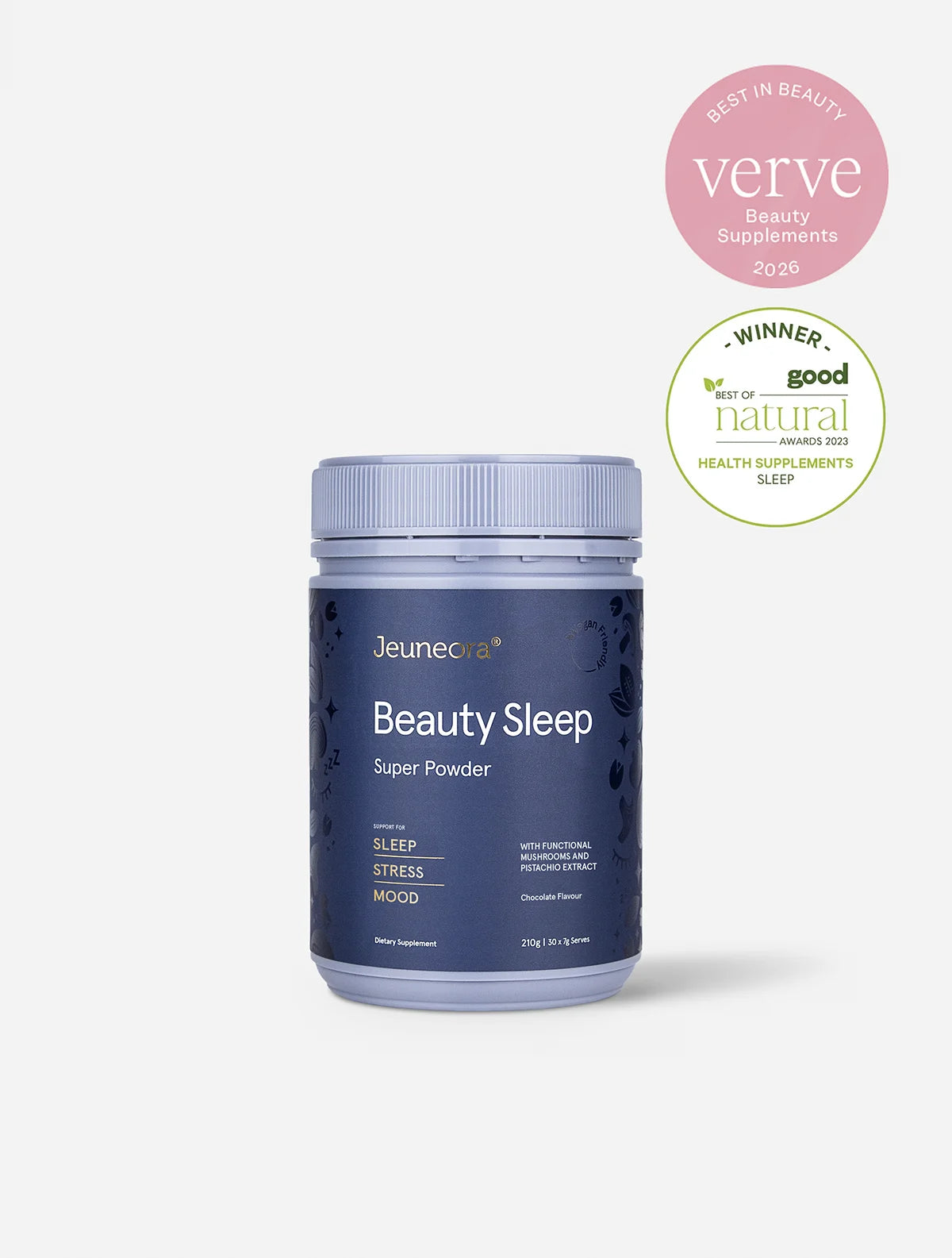
A wind-down ritual that lowers cortisol. This is where most sleepmaxxing routines accidentally get something right. The ritual itself matters. Something warm in your hands, dim light, ten minutes away from screens: these are real signals to your nervous system that the day is done. Beauty Sleep was formulated as exactly this kind of ritual. It's a warm, hot chocolate flavoured sleep supplement built around pistachio extract and adaptogenic mushrooms, with reishi studied for its ability to support healthy cortisol balance and non-REM sleep over time. It's not a sedative and it doesn't knock you out. It works with your stress response rather than overriding it, which is why it suits the "wired but tired" pattern so many women know too well.

The piece sleepmaxxing completely misses
Here's the blind spot in almost every sleepmaxxing video: hormones. The trend is largely built by and for people in their twenties, and it quietly assumes your hormones are stable. For women from their mid 30s onwards, that assumption often doesn't hold.
Progesterone, your body's natural calming hormone, starts declining years before menopause, and as it drops, cortisol loses its counterweight. That's the 2am wide-awake wake-up with a racing mind that no amount of mouth tape, kiwifruit or bedroom optimisation will touch. If your sleep changed somewhere in your late 30s or 40s and the standard advice stopped working, our guide to why women sleep worse in perimenopause explains what's actually going on. And if your PMS has been ramping up alongside the sleep changes, our guide to why your PMS might be getting worse covers how the two overlap.
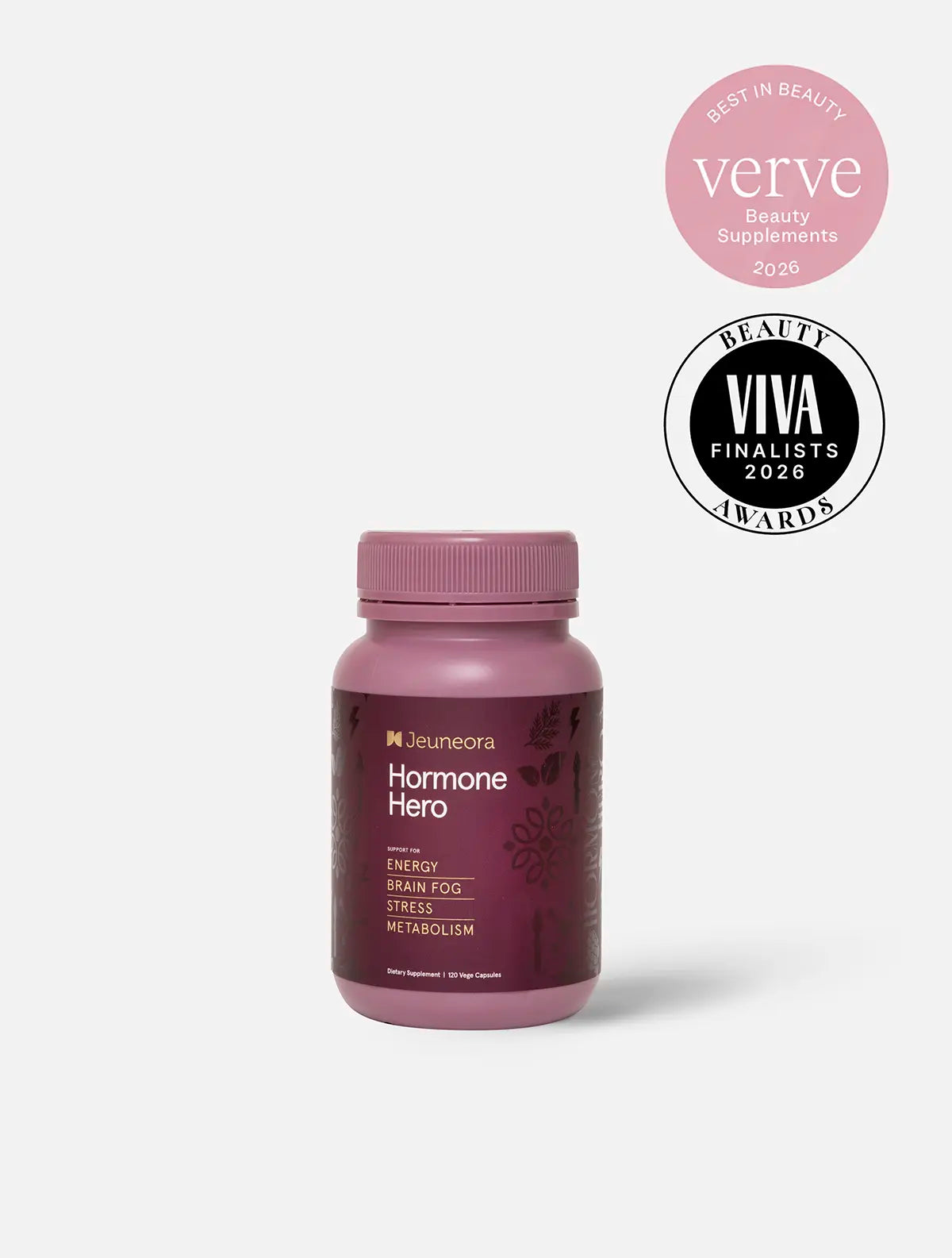
For that pattern, the support needs to run across the whole day, not just at bedtime. Hormone Hero in the morning delivers 320mg of magnesium bisglycinate, the full New Zealand recommended daily intake for women, alongside chaste berry, shatavari and botanicals for stress resilience and mood. Beauty Sleep in the evening handles the cortisol piece. Hormones supported by day, wind-down supported by night. It's less filmable than a haul video, and considerably more useful.
If you're going to optimise one thing, make it this
The most defensible version of sleepmaxxing isn't a 14-step protocol. It's a short, consistent evening ritual you actually enjoy, layered on top of the foundations above.
- Finish eating 2 to 3 hours before bed so your body can shift from digesting to repairing
- Dim the lights from 8pm and put the phone somewhere that isn't your hand
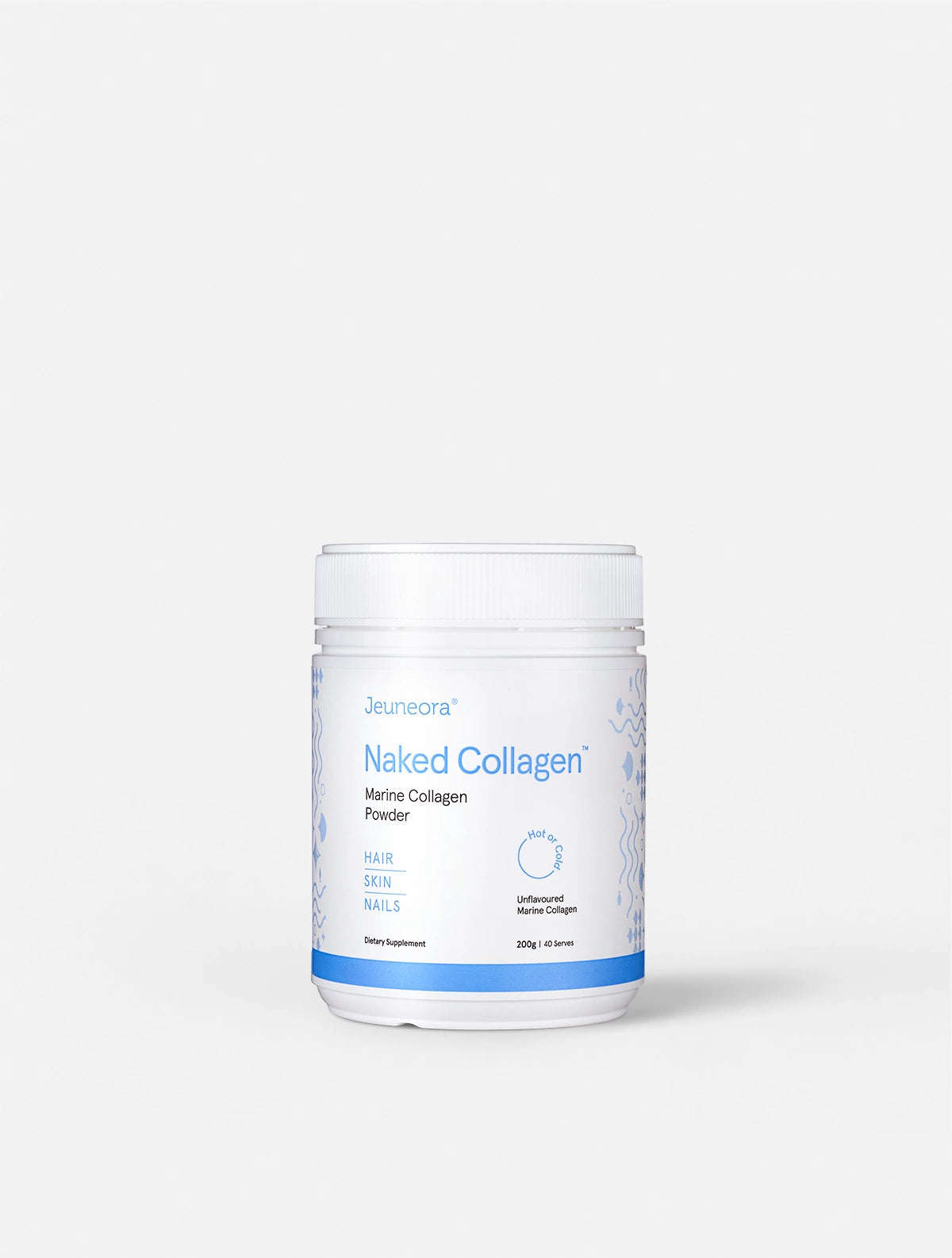
- Make a warm cup of Beauty Sleep about 30 minutes before bed, and stir in a dose of Naked Collagen. Sleep is when your body does its deepest repair work, and marine collagen is naturally rich in glycine, an amino acid that research links to better sleep quality. One cup, both jobs done
- Keep the bedroom around 18 degrees, dark, and as screen-free as you can manage
- Wake at the same time tomorrow, even if the night was rubbish. That's the lever that fixes the next night
If you want the full story on why evening collagen earns its place in a sleep routine, our guide to taking collagen at night covers it in detail.
When it's more than a trend problem
No amount of optimising fixes a genuine sleep disorder. If you snore loudly and pause breathing during sleep, if you're consistently exhausted despite enough hours in bed, or if you've had trouble falling or staying asleep at least three nights a week for three months or more, talk to your GP. Sleep apnoea, iron deficiency, thyroid issues and anxiety can all present as insomnia, and they're straightforward to test for.
And if your struggle is less about optimising good sleep and more about not being able to fall asleep at all, start with our guide to the seven real reasons you can't fall asleep. It covers the underlying causes sleepmaxxing content tends to skip.
The bottom line
Sleepmaxxing gets one big thing right: sleep is worth taking seriously. Where it goes wrong is in treating sleep like a performance to be gamed with products, when the things that genuinely move the needle are consistency, light, temperature, caffeine timing, a proper wind-down, and, for women especially, hormonal support that most of the trend never mentions.
Skip the tape. Keep the ritual. And if you're only going to borrow one thing from the trend, make it the warm drink and the dimmed lights, because that part has been quietly working all along.
Ready to build an evening that actually delivers? Explore the Jeuneora Sleep Collection and keep the good bits of sleepmaxxing, minus the price tag on all the rest.